The Hidden Engine of Gut Health, How Ruminococcus bromii Unlocks the Power of Resistant Starch
Last week, our lab published a new paper in Nature Communications that tackles one of the big open questions in human gut biology: How does one key microbe help us unlock the nutritional and metabolic power of resistant starch, the type of healthy carbohydrate found in many of the foods we eat every day?
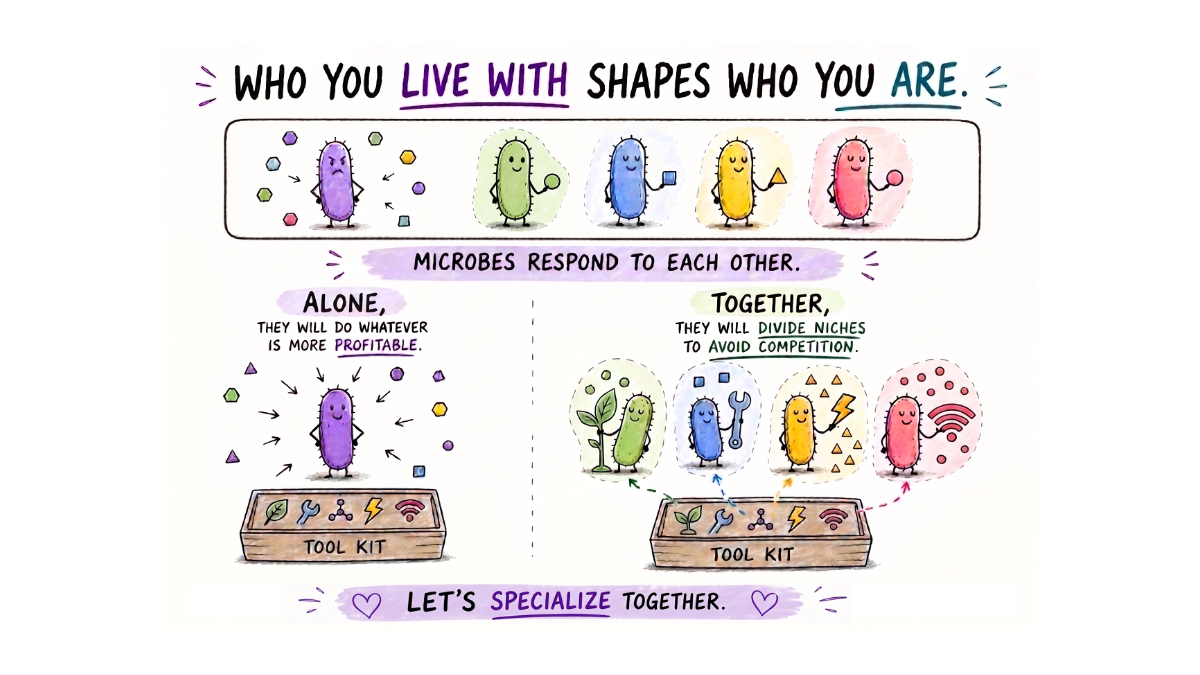
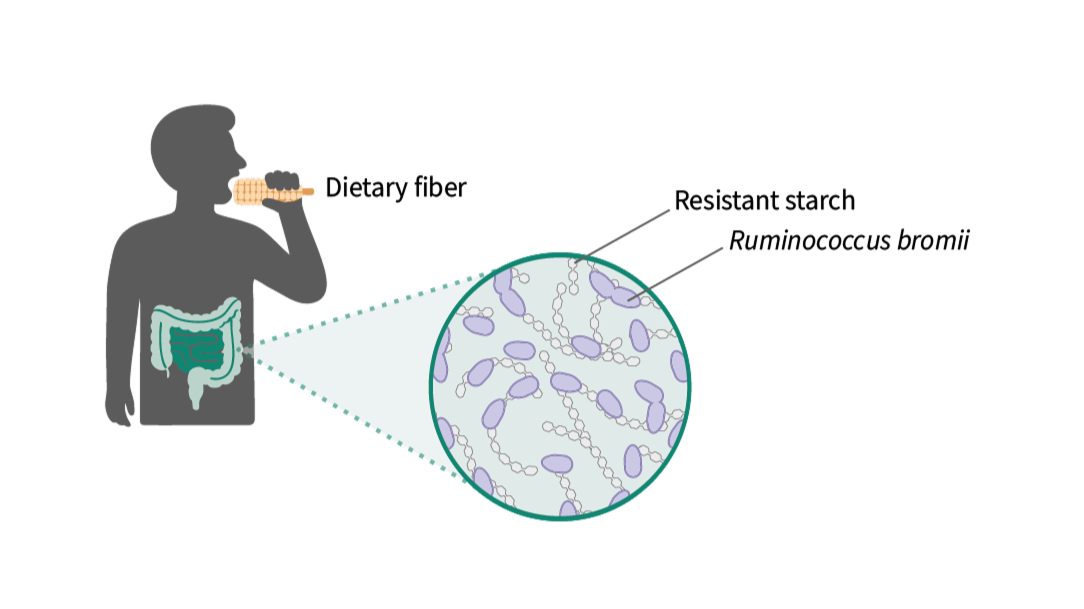
Dietary fiber is central to human health, yet the real work of breaking it down doesn’t happen in our body, it happens in our gut microbiome. Resistant starch (RS) is one of the most important forms of dietary fiber. It’s found in everyday foods like cooked-and-cooled potatoes, green bananas, whole grains, legumes, rice, and pasta. We cannot digest RS ourselves; instead, we rely entirely on a small group of specialized microbes to do it for us. What these microbes do shapes inflammation, metabolism, blood sugar control, and overall gut function.
Among these microbes, Ruminococcus bromii stands out. It is the primary bacterium that initiates the breakdown of resistant starch, making it a true “keystone species”, one whose activity feeds many other beneficial bacteria and helps maintain a healthy, balanced gut ecosystem.
But how exactly does R. bromii perform this crucial role? The answer lies in a fascinating structure known as the amylosome a dense, enzyme-packed complex located on the bacterium’s cell surface. Until now, how this sophisticated molecular machine operates and adapts to our diet was largely unknown.
Our new paper “Spatial constraints drive amylosome-mediated resistant starch degradation by Ruminococcus bromii in the human colon”, uncovers how exactly R. bromii performs this task, revealing a remarkable molecular system, highly efficient and finely regulated, that allows it to degrade resistant starch and support the broader microbiome.
Why does this matter? Understanding how R. bromii adapts to our diet could help us design better nutritional guidelines and probiotic therapies. By knowing how to support beneficial bacteria that efficiently unlock dietary fiber, we could potentially improve gut health, metabolism, and overall wellbeing.
So why is fiber good for us?
Fiber survives the journey through our stomach and small intestine and reaches the colon intact. There, our gut bacteria finally get to work. They ferment fiber into short-chain fatty acids such as butyrate—small molecules that reduce inflammation, regulate blood sugar, protect the gut lining, and contribute to overall wellbeing.
Resistant starch is especially important because it is one of the best fuels for producing these beneficial compounds. But again: we can’t digest resistant starch without help. That help comes from microbes like R. bromii.
What makes R. bromii so good at this job?
It uses a special structure on its surface called the amylosome, a dense cluster of enzymes that grabs onto starch granules and breaks them apart. Until now, we knew the amylosome existed, but we didn’t understand how it actually worked.
In our new study, we used a combination of cutting-edge tools, cryo-electron tomography (cryo-ET), proteomics, structural biology, biochemical assays, and high-resolution microscopy, that allowed us to examine R. bromii from the micrometer scale all the way down to the nanometer scale. This microbial point-of-view, multi-scale imaging approach let us visualize the amylosome in its natural context and understand how it is built, how it changes with diet, and how it functions at the nanoscale.
For the first time, we were able to actually see how this complex is organized, assembled, and deployed by the microbe (see movie).
An integrative model synthesizing our multi-layered data illustrates how the amylosome is spatially organized and dynamically regulated during starch degradation by R. bromii.
What we discovered?
We discovered several exciting things:
Visualization of the Amylosome for the first time. We captured images of the amylosome in action (see movie), revealing it as a stable, enzyme-packed layer tightly bound to the bacterial cell wall, reaching out towards starch granules.
We solved the structures of the main enzymes in the amylosome. This allowed us to look at them from extremely close-up—down to the atomic level—and understand how each enzyme works and how their shapes, positions, and interactions help the bacterium break down resistant starch efficiently.
The microbe changes the amylosome depending on what we eat. When resistant starch is abundant, R. bromii produces much more of the key enzymes needed for effective breakdown. Using dynamic regulation of protein composition in the amylosome, this bacterium adjusts the composition of its amylosome depending on the available diet. R. bromii dramatically increases and changes the production and positioning of certain key enzymes within the amylosome complex, depending on our diet.
Two enzymes work especially well together; by design, they are positioned next to each other. Each enzyme alone breaks down starch only moderately well, but R. bromii uses a LEGO-like strategy: each enzyme has only one specific connector piece that allows it to attach to the amylosome in a single, fixed orientation, right next to its partner. (see Figure Amy 4 and Amy 16) Just like LEGO bricks that can only snap together in one precise way, these enzymes are consistently placed side-by-side within the complex. This deliberate positioning dramatically boosts the microbe’s ability to break down resistant starch
R. bromii uses two levels of regulation for the utilization of resistant starch. The bacterium finely controls its starch-degrading capability by carefully placing enzymes in precise positions within the amylosome (spatial constraints) and regulating how much of each enzyme it produces (expression tuning). In simple terms, R. bromii carefully arranges and balances its starch-degrading enzymes like players on a sports team, ensuring maximum efficiency and effectiveness.

Why these discoveries matter?
Our findings show that even a single microbe, when equipped with the right molecular machinery, can shape the entire nutritional landscape of the gut. By uncovering how Ruminococcus bromii organizes, regulates, and deploys its amylosome to unlock resistant starch, we reveal a fundamental ecological process at the heart of human health. This work not only deepens our understanding of how diet and microbes interact, but also opens the door to new strategies for strengthening the gut ecosystem, improving metabolic health, and designing precise, microbe-informed nutritional and probiotic approaches. In other words: by understanding this tiny bacterium, we take a meaningful step toward understanding, and improving, the health of the host.
Check out our preprint here: https://rdcu.be/eSU3U
Thanks to the wonderful team and collaborators who made this research possible! Dr. Anke Trautwein-Schult, Sarah Morais Benedikt Wimmer , Dörte Becher , Ohad Medalia Omar Tovar Ed Bayer @amit itay, Meltem Tatli , Sebastian Simoni, Liron Levin and illustrations by Daphne Perlman